Researcher craft & identity
Mentorship & researcher onboarding
28 indexed claims · 9 guests · peaked 2025-Q3
Overview
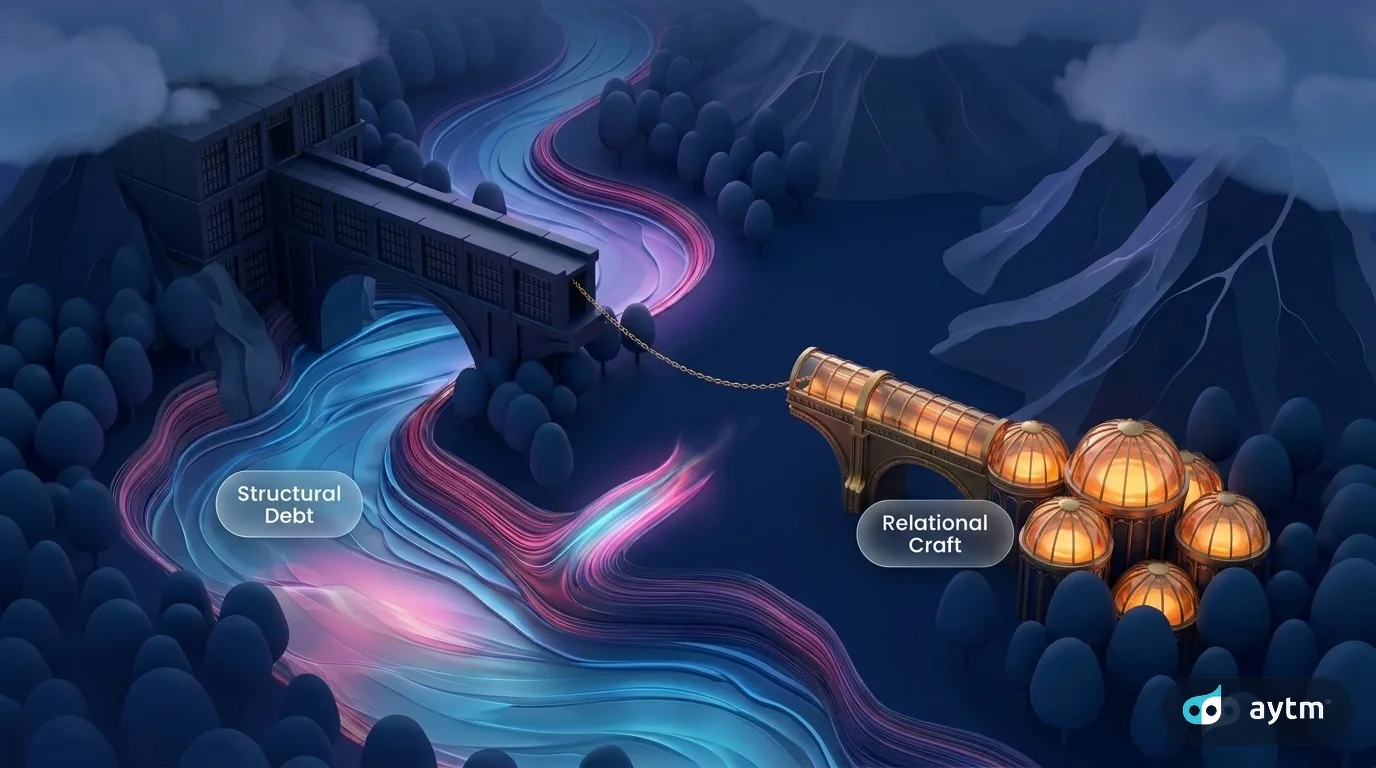
Across these conversations, a single structural tension animates the entire topic: the industry has largely stopped training its own people. Formal credentials have replaced on-the-job onboarding, shifting costs onto students and narrowing the pipeline in the process. Don DeVeaux and Brooke Reavey anchor the debate from their different institutional positions but converge on the same diagnosis — internships are scarce, often hollow, and rarely provide the professional-practice exposure new researchers need most. The corrective these guests keep returning to is less a policy than a discipline: real internships with substantive work, mentorship organized as a rotating network rather than a single patron, and an honest reckoning with the soft skills — communication, professional judgment, adaptability across client contexts — that formal programs can gesture toward but cannot fully deliver.
From the corpus
- Pure-remote internships during and after COVID succeeded only when companies built explicit structure around them — virtual introductions, scheduled meetings, project assignments; interns left alone in remote roles felt abandoned, and the difference came from intentional integration, not the format itself. — Don DeVeaux, Ep. 18 ·
cl-don-deveaux-016 - By requiring an expensive master's degree for roles that companies once trained people into on the job, the industry has shifted the cost of entry-level training onto students — who go into debt to subsidize what employers used to provide, which is ethically troubling and reduces pipeline diversity. — Brooke Reavey, Ep. 58 ·
cl-brooke-reavey-007 - The biggest classroom-to-workplace gap is professional practice — writing a status update email, communicating data problems to clients, juggling multiple projects — for which no formal course exists; programs can only expose students to examples and let real-client capstone work surface the rest. — Don DeVeaux, Ep. 18 ·
cl-don-deveaux-013 - A real internship is a two-way trial in which the intern does the actual job they would be hired into, not a 12-week project that ends with reorganizing the supply closet; both sides need to see whether the fit works, and the model only delivers when interns are thrown into substantive work. — Don DeVeaux, Ep. 18 ·
cl-don-deveaux-014 - The strongest model for academic-industry partnership in market research is one in which a hundred-plus companies actively invest time — mentoring students, guest-speaking, providing tool access — because no textbook can substitute for hearing from practitioners who do the work today. — Don DeVeaux, Ep. 18 ·
cl-don-deveaux-015 - Mentorship works as a rotating network — not a single mentor — and the mentee's job is to make the relationship two-way by closing the loop on what the advice produced; mentors ideally are not direct managers, and quality of human connection matters more than collecting a long list. — Don DeVeaux, Ep. 18 ·
cl-don-deveaux-017 - The structure of market research — finding the business problem, gathering consumer information, analyzing it, and communicating it to stakeholders — does not change with AI or any new technology; what changes is how each step gets done faster and how repetitive burden is removed. — Don DeVeaux, Ep. 18 ·
cl-don-deveaux-001 - When researchers make a project mistake, the right managerial response is to ask what they learned and what their plan is — not to punish; coming forward with a problem and three steps already thought through is the mark of professionalism, not failure. — Don DeVeaux, Ep. 18 ·
cl-don-deveaux-006
Contributing guests
Episodes in Mentorship & researcher onboarding
- The bystander problem in market research with Brooke Reavey — Ep. 58 · May 12, 2026
- From Classroom to Boardroom: Don DeVeaux on Training the Next Gen of Researchers — Ep. 18 · Jul 22, 2025
See Researcher craft & identity mapped across all quarters →