Researcher craft & identity
Researcher development (skills, growth, learning)
181 indexed claims · 40 guests · peaked 2025-Q3
Overview
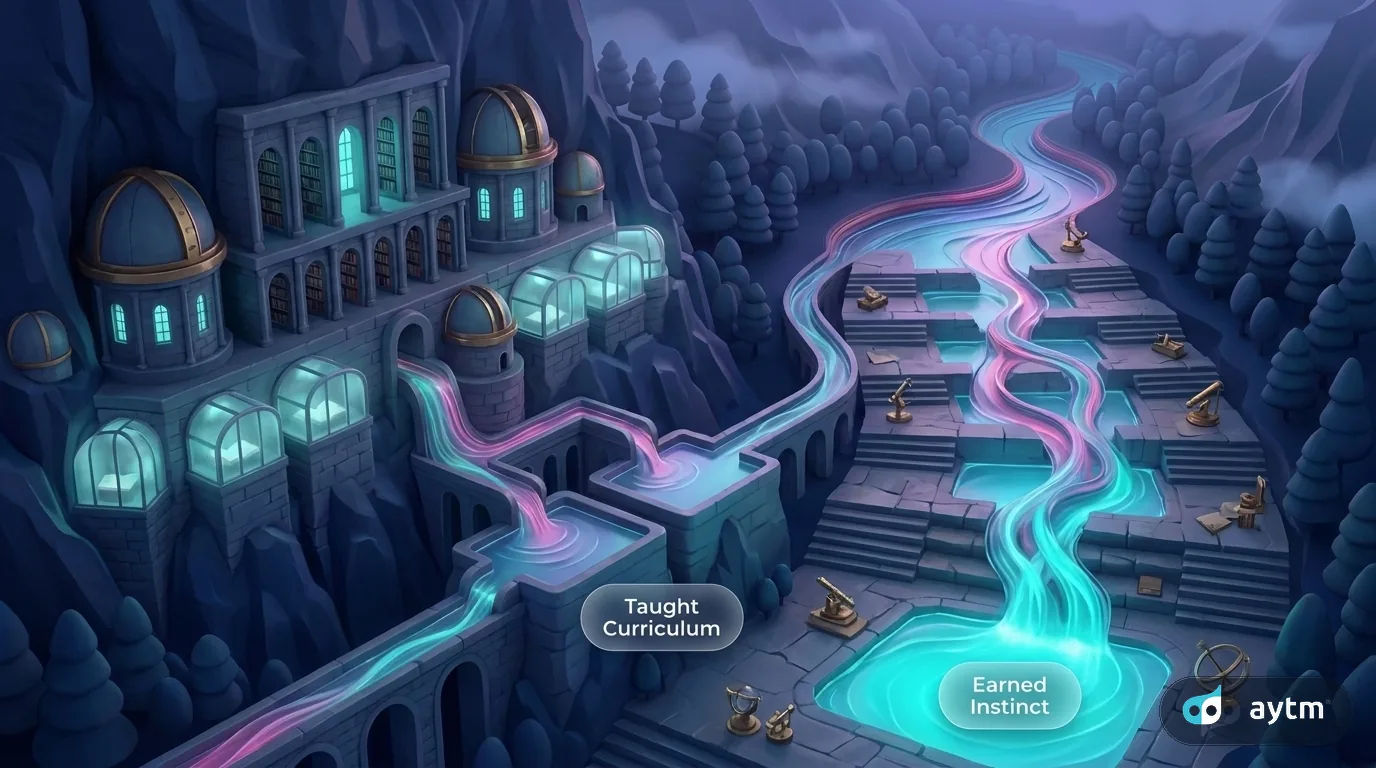
Across these podcast conversations, one tension runs through almost every discussion of what it means to develop as a researcher: the question of which skills belong to the human and which belong to the tool. Guests from academia, Fortune 500 insights teams, and boutique consultancies converge on a set of irreducible competencies — curiosity, courage, critical thinking, empathy — while debating with equal conviction how AI reshapes the road to mastery. What sharpens the discourse is that the same speakers who celebrate AI's efficiency also warn that shortcuts erode resilience, that automating grunt work can hollow out the judgment it once built, and that influence cannot be practiced through a chatbot. Mentorship, deliberate practice, business literacy, and the courage to hold a grounded point of view emerge as the real curriculum — one no program fully teaches and no AI tool can substitute.
From the corpus
- Three skills define a good researcher regardless of how technology evolves: intellectual courage to question oneself as well as others; agility to navigate changing tools without losing sight of changing human behavior; and broad curiosity that includes literature, philosophy, history, and art as tools for understanding the human condition. — Sarah Montgomery, Ep. 22 ·
cl-sarah-montgomery-021 - The single highest-leverage 30-day action for a researcher seeking influence is to grab coffee with a non-research colleague — not the CFO, but somewhere reachable — and ask them to explain their role; the conversation costs nothing and reliably converts into broader business literacy and better questions later. — Ed Kahn, Ep. 40 ·
cl-ed-kahn-020 - AI will compress insights timelines and surface themes humans cannot see by hand, but the consumer plug — primary research, multi-data-point integration, the human deciding which question to ask — does not go away; AI is going to be how researchers do it faster, not what gets done instead of researchers. — Kim Duncan, Ep. 14 ·
cl-kim-duncan-021 - What retains people in research is not the appeal of the industry but a manager who recognizes that their skills transfer — the AmEx hiring manager's translation \"subscribers become card members, newsstand buyers become prospects\" is the prototype move; without that translator, the field loses talent. — Charitie Dantis-Gayo, Ep. 42 ·
cl-charitie-dantis-gayo-010 - Empathy — understanding a client's pressures before they have to articulate them, approaching with lower-cost faster solutions, asking relevant questions not to sell a research campaign but to show genuine understanding — is the most essential and most underrated skill for researchers seeking influence. — Laurie Demeritt, Ep. 50 ·
cl-laurie-demeritt-028 - Early-career professionals lost foundational years of in-person relationship-building during COVID; AI emerged in that window as a substitute for asking another human, which compounds the deficit — managers must deliberately re-teach interpersonal skills, including knowing when not to ask the chatbot. — Charitie Dantis-Gayo, Ep. 42 ·
cl-charitie-dantis-gayo-017 - An MSMR degree is preparation for many adjacent roles — brand management, customer success, sales engineering — because the underlying skills (working with data, understanding consumers, summarizing for the business) transfer wherever stakeholders need to communicate with each other through evidence. — Don DeVeaux, Ep. 18 ·
cl-don-deveaux-022 - The biggest classroom-to-workplace gap is professional practice — writing a status update email, communicating data problems to clients, juggling multiple projects — for which no formal course exists; programs can only expose students to examples and let real-client capstone work surface the rest. — Don DeVeaux, Ep. 18 ·
cl-don-deveaux-013
Contributing guests
Episodes in Researcher development (skills, growth, learning)
- Why food consumers say one thing and do another with Laurie Demeritt — Ep. 50 · Mar 10, 2026
- Charitie Dantis-Gayo — Nonlinear Paths, Hiring for Will, and Bringing the Human Back to Insights — Ep. 42 · Jan 13, 2026
- Earning a seat at the table: risk, value, and the power of insight with Ed Kahn — Ep. 40 · Dec 23, 2025
- The Socratic Method and Consumer Understanding: Asking Better Questions with Sarah Montgomery — Ep. 22 · Aug 19, 2025
- From Classroom to Boardroom: Don DeVeaux on Training the Next Gen of Researchers — Ep. 18 · Jul 22, 2025
- Beyond Demographics: Redefining Flavor Segmentation with Kim Duncan — Ep. 14 · Jun 24, 2025
See Researcher craft & identity mapped across all quarters →