Researcher craft & identity
Curiosity in research
39 indexed claims · 29 guests · peaked 2025-Q3
Overview
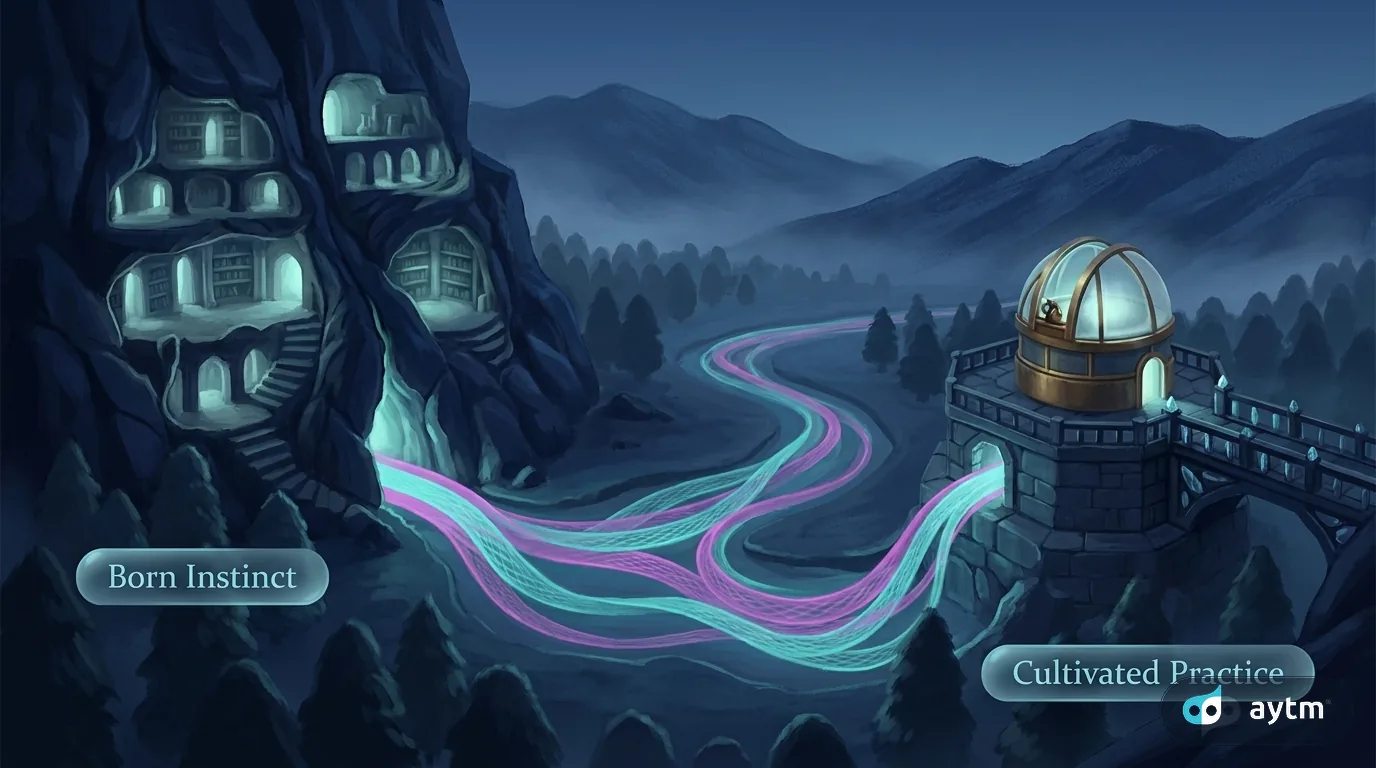
Across these podcast episodes, curiosity emerges not as a soft virtue but as the profession's load-bearing trait — the quality that predicts hiring success, drives methodology, and, in an era of accelerating AI capability, defines what researchers still possess that machines do not. Guests reach near-unanimous agreement on the diagnosis while dividing sharply on the prognosis: some insist curiosity is innate and must be screened for in hiring; others argue it is a developable habit that can be scheduled, routinized, and deliberately exercised. Beneath both camps runs a shared urgency — that as tools automate the procedural and AI absorbs the analytical, the researcher's last competitive advantage is the distinctly human commitment to deciding what is worth knowing in the first place. How to protect, sustain, and actively express that commitment is where the conversation gets interesting.
From the corpus
- Three skills define a good researcher regardless of how technology evolves: intellectual courage to question oneself as well as others; agility to navigate changing tools without losing sight of changing human behavior; and broad curiosity that includes literature, philosophy, history, and art as tools for understanding the human condition. — Sarah Montgomery, Ep. 22 ·
cl-sarah-montgomery-021 - For someone overwhelmed by shrinking entry points and constant technological change, the single most important thing to hold onto is curiosity — maintaining it and continuing to ask questions will keep them on the right path, in an industry of great people that no one enters to get rich. — Brooke Reavey, Ep. 58 ·
cl-brooke-reavey-028 - Newcomers entering consumer insights today should make curiosity, hands-on tool experimentation, and LLM literacy their daily practice — knowing both the powers and the limitations of AI tools — while learning the proven methodologies and rules of thumb from those who came before. — Lev Mazin, Ep. 24 ·
cl-lev-solo-017 - The most durable advice for an insights career is to stay persistently curious, build a range of skills from technical to soft, and commit to delivering perspective — not just research — because the landscape will keep shifting regardless of what technology arrives next. — Marcus Cunha, Ep. 25 ·
cl-marcus-cunha-025 - The one non-negotiable attribute for researchers navigating a constantly changing field is lifelong learning — staying curious, consuming new research, attending webinars at 1.5x speed, and remaining hungry to understand what consumers are thinking. — Steve Markenson, Ep. 35 ·
cl-steve-markenson-022 - A PhD is not required to do behavioral-science-grounded retail research; the only non-substitutable trait is genuine curiosity about real shopping behavior — without it, even the best academic credentials will not produce useful applied insight. — Hassan Aleem, Ep. 27 ·
cl-hassan-aleem-024 - Powerful insights require an insatiable curiosity that habitually rejects conventional wisdom and asks tough questions; without that disposition, researchers cannot get to the answers that drive real business transformation. — Ben Valenta, Ep. 20 ·
cl-ben-valenta-028 - The real value of expertise — in research or any craft — is knowing where to apply the tool, not just being able to operate it; possessing all the technology in the world without that knowledge produces zero value. — Nancee Halpin, Ep. 41 ·
cl-nancee-halpin-021
Contributing guests
Episodes in Curiosity in research
- The bystander problem in market research with Brooke Reavey — Ep. 58 · May 12, 2026
- The human context AI can't replicate with Nancee Halpin — Ep. 41 · Jan 6, 2026
- How Shoppers Really Decide: Value, Sensory Shopping, and AI's Limits with Steve Markenson — Ep. 35 · Nov 18, 2025
- Measuring the Subconscious Shopper: How Hassan Aleem Brings Behavioral Science to Grocery Decisions — Ep. 27 · Sep 23, 2025
- Marcus Cunha Jr. — The Educator's Case for Perspective Over Data — Ep. 25 · Sep 9, 2025
- Scaling Consumer Insights: Design Thinking, Empathy, Tech & Analytics in Action — Ep. 24 · Sep 2, 2025
- The Socratic Method and Consumer Understanding: Asking Better Questions with Sarah Montgomery — Ep. 22 · Aug 19, 2025
- Ben Valenta — Fans Have More Friends: Community as the Animating Force of Sports Fandom — Ep. 20 · Aug 5, 2025
See Researcher craft & identity mapped across all quarters →