Industry, profession & meta
Brand strategy & marketing fundamentals
17 indexed claims · 9 guests · peaked 2025-Q2
Overview
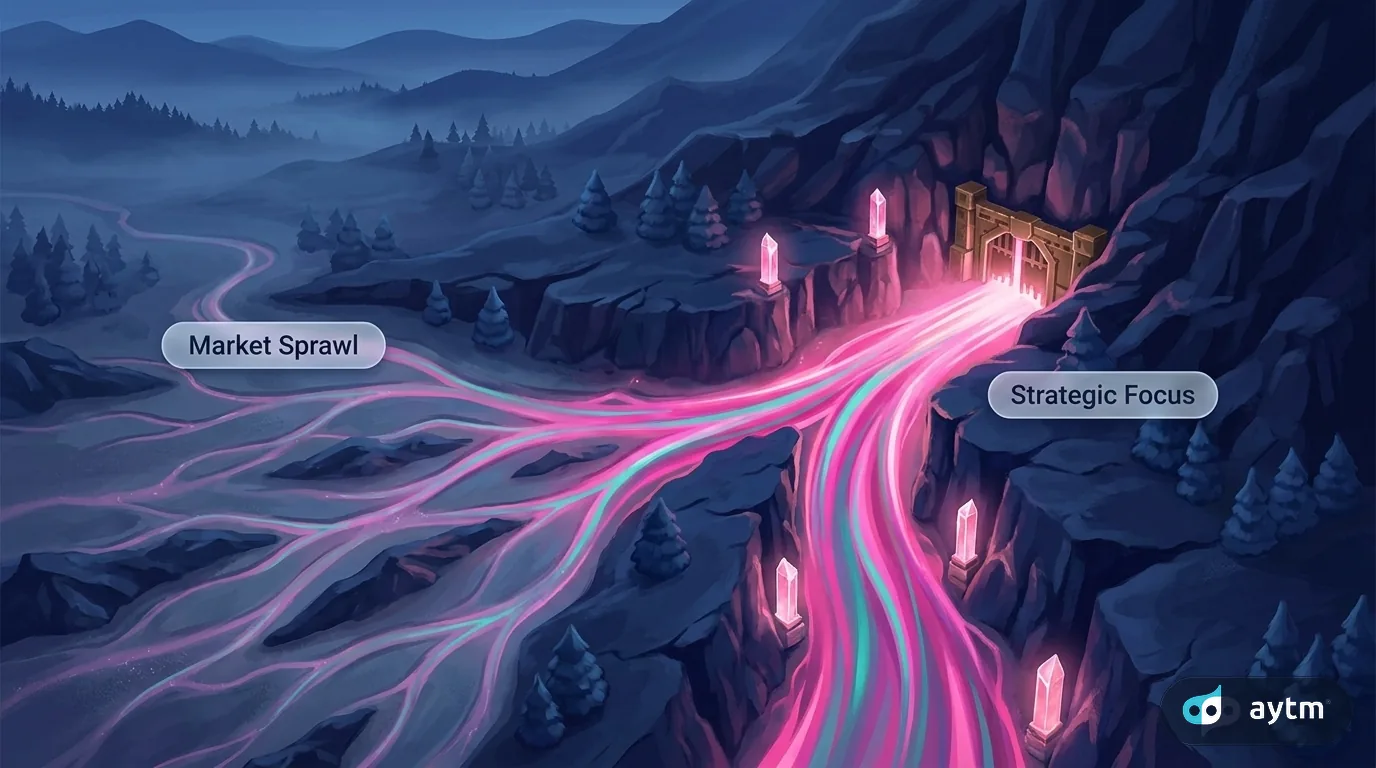
Brand strategy, these conversations argue, is fundamentally an act of discipline — the willingness to say no, to commit to a position, and to measure what actually matters. A central tension runs through this topic: premium brands earn their pricing power not through feature advantages alone but through the intimacy of the relationship they build, yet that relationship requires rigorous self-knowledge that most brands lack. Research reveals uncomfortable gaps between internal conviction and market reality, attribution surveys mislead more than they inform, and brand health monitoring lapses until identity itself is at risk. The counterweight to this fragility is commitment: to enduring forces over reactive pivots, to focus over fragmentation, and to a clear brand promise that defines not just what a brand does but what it refuses to become.
From the corpus
- Post-purchase 'how did you hear about us?' questions are among the worst survey use cases: respondents remember only the most salient touchpoint from a multi-channel journey, and investing based on those answers systematically overweights already-working channels while creating a permanent blind spot for new ones. — Rand Fishkin, Ep. 19 ·
cl-rand-fishkin-007 - When a food brand added two famous celebrities who had never mentioned their product to a post-purchase attribution dropdown, approximately 85% of respondents who selected 'influencer' chose one of those two names — proving that top-of-mind awareness, not actual influence, drives attribution survey responses. — Rand Fishkin, Ep. 19 ·
cl-rand-fishkin-008 - There is no clear ROI on sustainability investment today, but sustainability is likely to become an expected baseline rather than a differentiator — brands should invest now knowing that the return will be avoiding the cost of not having it, not earning a premium. — Laurie Demeritt, Ep. 50 ·
cl-laurie-demeritt-015 - Good research should reframe what a brand thinks it knows — JOOLA's first audience segmentation revealed that 70% of the Pickleball market was casual/recreational players, upending an internal assumption that the brand's niche strength was the whole story. — Leyla Doany, Ep. 11 ·
cl-leyla-doany-009 - When building an insights function from scratch, the most foundational first step is understanding where you sit in the market — without that picture, a brand operates in an echo chamber making decisions based on internal assumptions. — Leyla Doany, Ep. 11 ·
cl-leyla-doany-005 - Marketing is positioning, and positioning is the art of sacrifice — a marketing plan is not a buffet, and trying to do everything produces the same dissatisfaction as eating everything. — Doug Zarkin, Ep. 6 ·
cl-doug-zarkin-020 - The brand value equation is experience divided by price; premium brands can charge premium prices when the delta between experience delivered and price paid is significant. — Doug Zarkin, Ep. 6 ·
cl-doug-zarkin-001 - A team should hold no more than five KPIs at a time; if less than 20% of available time goes to any one thing, no real progress will be made on it. — Doug Zarkin, Ep. 6 ·
cl-doug-zarkin-014
Contributing guests
Episodes in Brand strategy & marketing fundamentals
- Why food consumers say one thing and do another with Laurie Demeritt — Ep. 50 · Mar 10, 2026
- Zero-Click Marketing: The Hidden Strategy Behind Platform Algorithm Changes with Rand Fishkin — Ep. 19 · Jul 29, 2025
- Building an Insight-Driven Culture with Leyla Doany — Ep. 11 · Jun 3, 2025
- Doug Zarkin — Brand Love, Thinking Human, and the Brand Value Equation — Ep. 6 · Apr 22, 2025
See Industry, profession & meta mapped across all quarters →