Insights function & business
Stakeholder management & influence
79 indexed claims · 27 guests · peaked 2026-Q1
Overview
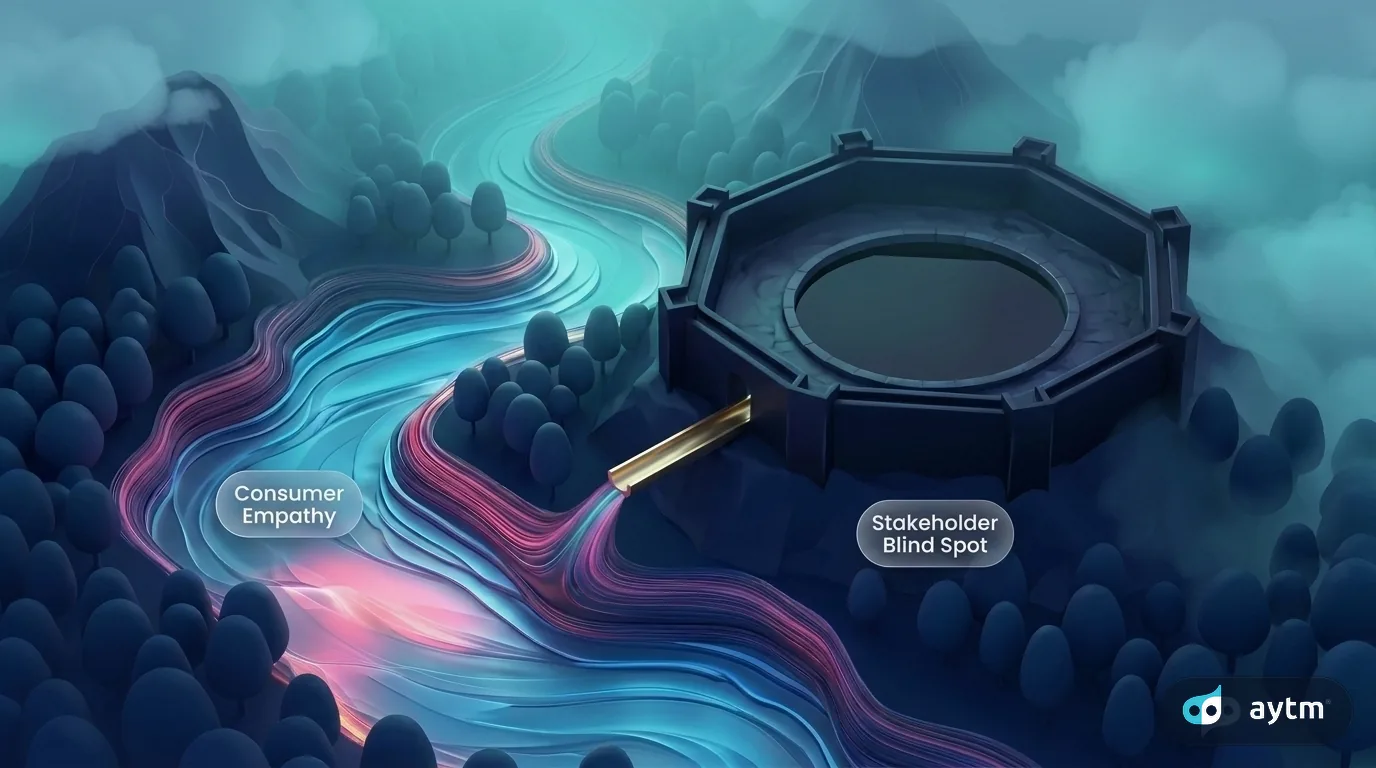
Stakeholder management is the craft that turns research into action — and these conversations reveal it as more demanding than the label suggests. A central tension runs through contributions from 34 practitioners: the researcher's service instinct to answer every question versus the strategic imperative to set boundaries and let leaders arrive at the no themselves. Influence, these guests argue, is not the capstone of a research career but its prerequisite — built through sponsor networks before the meeting opens, through storytelling that transfers ownership of conclusions to the listener, and through the Socratic discipline of asking rather than asserting. A secondary current exposes an occupational irony: researchers who spend their professional lives listening to consumers routinely fail to apply that same attention to internal stakeholders who are, in practice, their own customers.
From the corpus
- The single highest-leverage 30-day action for a researcher seeking influence is to grab coffee with a non-research colleague — not the CFO, but somewhere reachable — and ask them to explain their role; the conversation costs nothing and reliably converts into broader business literacy and better questions later. — Ed Kahn, Ep. 40 ·
cl-ed-kahn-020 - Research programs suffer from scope bloat when teams fail to explicitly state what the research will NOT answer; defining the boundaries of a study upfront — including what is out of scope — is as important as defining its objectives, and protects against the stakeholder friction of unanswered questions. — Aarti Bhaskaran, Ep. 52 ·
cl-aarti-bhaskaran-013 - Research tech should stay in its lane and do research — showing the insights about your clients — rather than being pushed by buyers to act like a strategy consultancy; clients increasingly want research tools to be McKinsey-style consultants while paying research-tool prices, and that is not a fair ask. — Marin Mrsa, Ep. 59 ·
cl-marin-mrsa-018 - Empathy — understanding a client's pressures before they have to articulate them, approaching with lower-cost faster solutions, asking relevant questions not to sell a research campaign but to show genuine understanding — is the most essential and most underrated skill for researchers seeking influence. — Laurie Demeritt, Ep. 50 ·
cl-laurie-demeritt-028 - To persuade a charismatic, passionate founder to pivot a brand direction, only irrefutable live-market data is sufficient — a CMO who walks in saying 'I did a live study of hundreds of thousands of people, and here is how they responded' has what a survey or a gut instinct cannot provide. — Kate O'Keeffe, Ep. 55 ·
cl-kate-okeeffe-017 - Earning executive buy-in for an insights function depends on identifying both your sponsors (advocates who speak for you when you're not in the room) and your skeptics (people whose past bad experiences must be addressed directly), and meeting each where they are. — Ashley Hopkins, Ep. 12 ·
cl-ashley-010 - The worst way to deliver unwelcome findings is to vanish for three months and return with a final deck to stakeholders who have never seen the data — enrolling them along the way with short consumer video clips is what prevents a credibility crisis at the reveal. — Laurie Demeritt, Ep. 50 ·
cl-laurie-demeritt-020 - The most effective form of stakeholder influence is storytelling that lets the listener arrive at the conclusion themselves; trying to prove you're right is structurally weaker than telling the story of someone experiencing what you want them to understand. — Charitie Dantis-Gayo, Ep. 42 ·
cl-charitie-dantis-gayo-019
Contributing guests
Episodes in Stakeholder management & influence
- An outsider's case for why surveys will outlast every trend with Marin Mrsa — Ep. 59 · May 19, 2026
- Closing the say-do gap: what live experiments reveal that surveys miss with Kate O'Keeffe — Ep. 55 · Apr 21, 2026
- Measuring what matters in a world of short attention spans — Ep. 52 · Mar 31, 2026
- Why food consumers say one thing and do another with Laurie Demeritt — Ep. 50 · Mar 10, 2026
- Charitie Dantis-Gayo — Nonlinear Paths, Hiring for Will, and Bringing the Human Back to Insights — Ep. 42 · Jan 13, 2026
- Earning a seat at the table: risk, value, and the power of insight with Ed Kahn — Ep. 40 · Dec 23, 2025
- Ashley Hopkins — Building Insights From Scratch: Listening Tours, Sponsors, and the Founder Mentality — Ep. 12 · Jun 10, 2025
See Insights function & business mapped across all quarters →